Syracuse, New York, has long been a place of courage, resilience, and progress within Black history. From its pivotal role in the Abolitionist Movement and the Underground Railroad to the cultural legacy of the 15th Ward and the ongoing revitalization of the South Salina Street corridor, Black history is deeply woven into the fabric of our community.

Today, visitors and residents alike can explore this rich legacy year-round through historic sites, museums, cultural institutions, and digital storytelling. Here’s how to experience Black history in Syracuse and Onondaga County.


History & Culture 

The 15th Ward Economy

In the 1930's and 40's, the 15th Ward served as a safe haven for those displaced after World War II. Many African Americans and refugees moved North in hopes of finding safety and work. However, when they arrived in Syracuse, they found few places they were allowed to live outside of the 15th Ward through a combination of redlining, racial covenants, and other systemic discrimination practices. The new residents of the 15th Ward turned the neighborhood into a self-sustaining economic engine. The neighborhood was vibrant and alive, turning into one of the blueprints of black urban entrepreneurship, seeing as the 15 Ward housed over 100 Black-owned businesses.


Walk through History: Syracuse Freedom Trail 

Step into Syracuse’s role as a stronghold of abolitionist activity with a self-guided tour along the Syracuse Freedom Trail. This downtown walking trail highlights key locations connected to the 19th-century Abolitionist Movement and the fight for freedom.

Interpretive markers throughout the city share powerful stories of the people, places, and events that helped shape Syracuse as a sanctuary city for freedom seekers. Notable stops include:

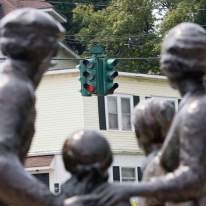
  • Jerry Rescue Monument – Commemorating the 1851 rescue of freedom seeker William “Jerry” Henry

  • Plymouth Congregational Church – A hub of abolitionist organizing

  • The Courier Building – Home to influential anti-slavery publications

  • Noble Cellar – Formerly the Wesleyan Methodist Church, a critical meeting place for abolitionists


Faces of the Underground Railroad

Located at the Onondaga Historical Association Museum of History & Research Center, Freedom Bound: Slavery & Abolition in New York is a permanent exhibit dedicated to the Underground Railroad and anti-slavery activism in Central New York.

Through immersive storytelling, interactive displays, and personal narratives, the exhibit brings history to life—exploring slavery, resistance, abolition, and the enduring meaning of freedom. Lights, sound, images, and first-person accounts create a powerful and educational experience for visitors of all ages.

Discover Harriet

Just a short drive from Syracuse, the Harriet Tubman National Historical Park in Auburn honors the life and legacy of one of America’s most iconic freedom fighters.

The park includes:

  • The Harriet Tubman Residence

  • The Thompson Memorial African Methodist Episcopal Zion Church

  • A modern Visitor Center

  • The Tubman Home for the Aged

Visitors can explore the grounds through self-guided tours that highlight Tubman’s values of courage, faith, and community care. Complete your visit at Fort Hill Cemetery, where Harriet Tubman is laid to rest.

Find out more about the park and life of Harriet Tubman here.


Virtual History

Black history in Central New York isn’t confined to physical spaces. Our Stories: A Virtual Black History Museum allows visitors to explore Syracuse’s Black heritage from anywhere in the world.

Created through the Black History Preservation Project, the virtual museum features more than 220 digitized artifacts, including oral histories, photographs, newspaper clippings, and archival documents. Visitors can also view the documentary Syracuse’s 15th Ward and Beyond, which chronicles the vibrant neighborhood that was displaced during urban renewal.


Experience Black History Year-Round

From walking tours and museums to digital storytelling and regional landmarks, Syracuse and Onondaga County offer powerful ways to engage with Black history throughout the year. These stories of resilience, leadership, and community continue to shape the region today, inviting visitors to learn, reflect, and connect.

Plan your visit and discover how Syracuse’s Black history is not only preserved, but actively celebrated.

*Notable Syracusans information provided by Onondaga Historical Association

You May Also Like